

Reality Check for All of Us

Before revealing all the strategies for helping your child, we need to start with understanding the culture children are being exposed to at much earlier ages than we were.  Obviously, you are a good parent. By watching these videos, you are here trying to help your child handle a very serious and potentially dangerous topic (95% of parents fail to take this first step).

The good news is you and your child will benefit from your taking the time to gather realistic strategies.  In the below video, you discover WHY we all need the right tools to truly help our children make safer and smarter choices.  The next video will begin to share proven strategies for making a positive impact.

When you finish the video, SHARE with us in the “Speak Your Mind ” section below. I promise to PERSONALLY respond.

~Mike Domitrz
Founder of The Date Safe Project, Inc.

PLAY EYE-OPENING VIDEO #1

IMPORTANT REMINDER: Each of the following videos refers to talking with “Teenagers.” Remember if you are a parent of a child younger than 13 years old, the videos give you a fantastic opportunity to prepare your child at an even younger age.

CLICK HERE TO WATCH NEXT VIDEO

Please post any comments or questions below in the “Speak Your Mind” section below the comments.
I will PERSONALLY respond to each comment you leave on this page!! Lets have fun taking this journey.

Talking to Daughter or Son about Dating & Sex (Video)

How do you share openly and honestly about sexual intimacy without giving your child too much information?  Understandably, parents fear giving too much information and thus creating a catalyst for your child to want to engage in sexual activity.

How do you find the right approach without making sex sound bad or too attractive?  Discover in the video below HOW to avoid the conversation going badly. In fact, you will learn an approach for making YOU THE EXPERT. You child will want to turn to you for questions (instead of their peers who can misguide them)!

When you finish the video below, SHARE with us in the “Speak Your Mind ” section below. I promise to PERSONALLY respond to each person.

~Mike Domitrz
Founder of The Date Safe Project, Inc.

ADVANCED STRATEGIES FOR TALKING WITH YOUR CHILD

IMPORTANT REMINDER: Each of the following videos refers to talking with “Teenagers.” Remember if you are a parent of a child younger than 13 years old, the videos give you a fantastic opportunity to prepare your child at an even younger age.

CLICK HERE TO WATCH NEXT VIDEO

Please post any comments or questions below in the “Speak Your Mind” section.
I will PERSONALLY respond to each comment you leave on this page!! Lets have fun taking this journey.

Talking Dating, Sex & More with Your Child (Video)

Would you like to help your sons and daughters make safer choices when dating (whether now and/or in the future)?  As a parent, you know how overly sexualized your child’s world is today.  They face pressures from their peers at much younger ages than we did.  They are exposed to images and ideas on TV, in movies, and on the internet we simply did not see at the same frequency.

The good news is you will discover HOW to connect and talk with your child in the video below.  You already have great knowledge which can be a huge help to your child.  Now, realize how to get your son or daughter to WANT to listen and gain your knowledge.  In the below video, you will find a simple strategy for how your child thinks – without making them feel like you are prying for information.

When you finish the video, SHARE with us in the “Speak Your Mind ” section below. I promise to PERSONALLY respond.

~Mike Domitrz
Founder of The Date Safe Project, Inc.

ADVANCED STRATEGIES FOR TALKING WITH YOUR CHILD

IMPORTANT REMINDER: Each of the following videos refers to talking with “Teenagers.” Remember if you are a parent of a child younger than 13 years old, the videos give you a fantastic opportunity to prepare your child at an even younger age.

CLICK HERE TO WATCH NEXT VIDEO

Please post any comments or questions below in the “Speak Your Mind” section.
I will PERSONALLY respond to each comment you leave on this page!! Lets have fun taking this journey.

Do Your Kids Ask? Parents Teaching Respect & Healthy Dating

Below are the 8 most common questions parents ask me when I am speaking in their schools or with their community organizations:

1. Without sounding like you are lecturing and without endorsing sexual activity, how do you approach the issue of healthy dating and intimacy with your child?
Kids are constantly told by their parents how “times were different” and “we were more respectful.” The truth is our culture has had a very unhealthy and confusing approach to dating, intimacy, and sexuality for a very long time – today is no different. Once parents admit the feelings of confusion they had as a young person and discuss their ‘scary’ or ‘troubling’ moments, the teenagers are more likely to connect with their parents. Sharing difficult and scary moments also helps your kids see the dangers and consequences of making bad decisions in a realistic and thought-provoking manner.

Instead of telling your child, “How times were different when you were young,” find a commonality between the two of you. When you tell someone how different it was back when you were young, why should your child think you can understand what they are going through? Connect with your son or daughter by opening the conversation with a question that shows you do understand their worries, concerns, and thoughts.

For example, a parent saying, “I remember getting all nervous before a date because I was wondering lots of stuff like, ‘Will my date like me?’, ‘Will my date find me attractive,’ ‘I wonder what my date is really like.’ Do you ever get nervous like that?” This type of question can make a parent more approachable to their child. No matter what your age is or the “times” you grew up in, these difficult feelings cross all generations. The key to success is asking in a sincere and caring tone.

2. What are the correct dating behaviors and practices to teach?
Self-respect, respect for your partner, and high standards need to be taught to males and females at all times. When a person believes in his or her self, the person is more likely to make the “right” decisions in difficult moments. Students with low self-esteem are more likely to lower their standards to please their partner — a very dangerous and unhealthy practice.

We need to teach young people to “expect to be respected” and to not tolerate any forms of disrespect (a date should ask before trying to do “something with you”). We need to teach how speaking out for yourself is both strong and sexy (many fear speaking out will be unattractive to their dates). We need teach them to better understand what “respecting” a date means. Respect is not simply opening doors, paying for meals, or other signs of chivalry. Respect is holding your date in the highest esteem and always getting your date’s permission before trying to do “something” with your date.

One of the most common mistakes parents make is assuming that the males are always the sexual aggressors. More and more, we are hearing about females becoming the more sexually assertive person in the relationship. Try to avoid all assumptions of gender roles.

3. At what age do my kids begin learning about intimacy?
By observing their parents, children learn intimacy at an extremely young age. If a young man sees his father ask his mother for a kiss, he is more likely to believe that asking is how he should act. If a young woman hears her mother talk about how respectful and loving her father is, the young woman is more likely to want a more respectful and loving partner.

Parents should begin discussing appropriate touching at early school ages and then advance into issues of intimacy as those years approach. Due to the images and discussions the television and the entertainment industry promote to younger audiences, parents need to have these conversations at much younger ages (for many, prior to the age of 10 is appropriate — kids are seeing or hearing about much more explicit behavior by this age). Even if you do not let your children watch such programs, they are likely to hear about these shows from their peers.

There is no one magical age for these conversations to take place. Each set of parents must decide what is right for his or her child. However, the day your child is born is the day your child begins watching you. Make a conscience effort to display respect in all aspects of intimacy and sexuality by asking before kissing people. When your kids watch you, what will they learn?

4. What do I teach my kids about the “Age Laws?”
Parents must teach their child about age laws. Each state has very specific laws regarding minors involved with sexual activity. Two 15 year olds could give each say, “Yes” to engage in certain sexual activity with each other and they would still be breaking the law in many states. In addition, parents need to help young people understand that these laws exist to help “protect” them. Learn the laws in your state so that you can address the legal aspect – just don’t make the legal element your focus. Kids typically find such conversations to be boring and most kids don’t fear the authorities catching them engaged in sexual acts.

5. How can parents help their kids avoid peer pressure?
Immediately begin treating your child with respect and with great value. By teaching a child how “special” he or she is, you can help him or her understand “why” getting involved with intimacy should be saved for an extremely “special” moment. Research proves that the earlier a child gets involved in intimacy is directly related how much “value” the child places in his or her own self. For this reason, we need to connect with our children in an engaging and “open” approach.

Children fear being lectured and being judged. Children love to be “heard.” Ask questions, listen with an open mind, and then have positive discussions. When your child feels a special connection with you and understands “why” you have such strong beliefs, he or she is more likely to believe YOU over his or her friends. Plus, when a child understands the “why” to not getting involved with certain behavior, he or she will have a real reason for saying “no” to peer pressure (instead of simply saying “because my parents said so”). The child will WANT to say “no” because he or she will believe that “no” is the right answer!

6. My son is very respectful — why would I need to worry about him sexually assaulting someone?
Most “respectful” males still learn about aspects of intimacy through their friends and what they see portrayed on television and in the movies. These sources of education promote disrespectful behavior by teaching males that if they are “smooth,” they can just make their moves and their partner will want them. When males just “make their moves,” they take a tremendous risk of engaging in behavior that their partners do not want – thus leading to committing a sexual assault. Parents need to talk with their sons about truly respecting a partner by understanding how valuable and special each person is as a human being (including the body, the mind, sexuality, personality, and values). Sons need to learn that the only way you can be sure what your date wants is to “ask” your date first.

7. My daughter is tough and outspoken — I don’t have anything to worry about, right?
WRONG! Many tough and outspoken females have been sexually assaulted or have become unexpectedly pregnant. A “tough” and “outspoken” female might think she is invincible and that belief can be extremely dangerous (she may believe “she would never get pregnant” or that “no man could ever sexually assault me”). By being over-confident, she may be less likely to see potential signs of trouble. Another female may be very confident in most aspects of her life, but not with intimacy or relationships.

Parents need to teach their daughters “awareness” to better equip their daughters for noticing signs of trouble. At the same time, we must understand that there is no 100% form of sexual assault prevention that a victim or survivor can utilize (100% prevention can only result by the assailant not attempting the behavior). A young woman or man could follow every healthy dating advice ever given and still be sexually assaulted. Stress to your daughter that she cannot ever be at fault for someone sexually assaulting her – this point must be stressed. Many, many females never tell their parents about their assault because the daughter fears how their parents will react. Help your daughter know that you will be there to support her and love her at all times!

8. Do I really need to have these conversations?
Not talking about complex issues simply leads to confusion. When kids talk to their friends, every component is often exaggerated and glamorized (every romantic encounter is amazing and romantic in their “dream world”). Thus, building the young person’s drive to experiment with sex, drugs, and other dangerous behaviors. Help the child learn the truth by speaking honestly about your memories in a manner that they can relate to. If you can be a little humorous, you can help break the barriers down for your teenager to start talking openly to you.”

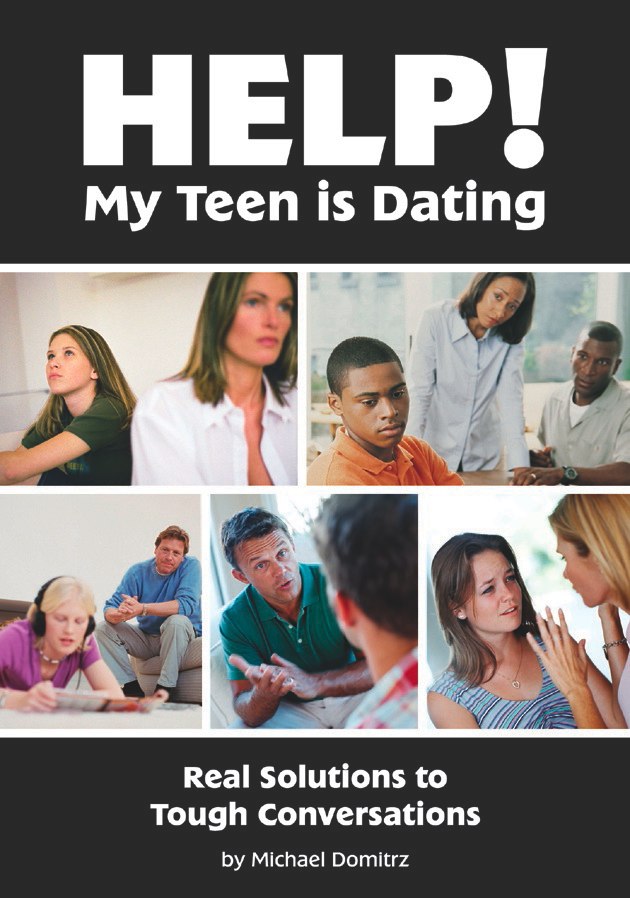
- written by Mike Domitrz, Executive Director of The Date Safe Project and Producer of HELP! My Teen Is Dating. Realistic Solutions to Tough Conversations. Each year, Mike speaks around the world in over 80 educational and military installations sharing the important messages of respect, consent, bystander intervention and supporting survivors.
To obtain permission to reprint any or all portions of this article, E-mail Mike here

Jamie Lynn Spears, Pregnancy, Statutory Rape, and the How Schools Need to Talk with Students

Jamie Lynn Spears’ official announcement she is pregnant is bringing up conversations about the legal age of consent for sexual activity.  From the Genarlow Wilson case in Georgia earlier this year to now the pregnancy of 16 year old Jamie Lynn Spears (the star of Nickelodeon’s "Zoey 101" and sister of Britney Spears), our country needs to take a sincere look at consent and society’s current approach to sexual education in our schools and in our homes.  From educators to parents, direct conversations are needed with all students. 

The entire concept of "consent" is constantly misunderstood.  In reporting of pregnancies involving minors, the media often says "consensual sex among minors."  When a state has laws stating a minor cannot give consent with a partner of a specific age, the media needs to use the following wording instead, "mutually agreed upon sex." The failure to use the correct wording leads to students and overall society responding with, "How can consensual sex be rape?"  Consent is a LEGAL term.

Here is where the problem begins.  How many teenagers and young adults actually have MUTUALLY AGREED UPON sexual activity?  For the sexual activity to be "Mutually Agreed Upon," it would demand two people agreeing together – A CONVERSATION (No, not a contract.  Two people talking with each other).  However, we know most students do not openly discuss their sexual activity with their partner until they are already at the point of being uncomfortable OR until after the act has already been done OR or not at all.

While speaking in middle schools, high schools, and colleges, students continually tell me that if they TALKED FIRST, it would slow down the speed at which the sexual activity is taking place AND often stop it from happening at all.  By talking first, they would frequently find the conversation uncomfortable which would be a telling sign one of the two people (if not both) is not mature enough and/or comfortable enough in the sexual situation that is about to occur!  Teaching consent the correct way better protects today’s students.

Start this discussion in your classroom and then report the results in the "Comments" section of this post.

Jamie Lynn Spears Pregnancy, Statutory Rape, and Parents

The Jamie Lynn Spears’ official announcement she is pregnant is bringing up conversations about the legal age of consent for sexual activity.  From the Genarlow Wilson case in Georgia earlier this year to now the pregnancy of 16 year old Jamie Lynn Spears, our country needs to take a sincere look at consent and society’s current approach to sexual education in our schools and in our homes.  From teachers to parents, direct conversations are needed with pre-teens and teenagers.

The entire concept of "consent" is constantly misunderstood.  In reporting of pregnancies involving minors, the media often says "consensual sex among minors."  When a state has laws stating a minor cannot give consent with a partner of a specific age, the media needs to use the following wording instead, "mutually agreed upon sex." The failure to use the correct wording leads to students and overall society responding with, "How can consensual sex be rape?"  Consent is a LEGAL term.

Here is where the problem begins.  How many teenagers actually have MUTUALLY AGREED UPON sexual activity?  For the sexual activity to be "Mutually Agreed Upon," it would demand two people agreeing together – A CONVERSATION (No, not a contract.  Two people talking with each other).  However, we know most teenagers do not openly discuss their sexual activity with their partner until they are already at the point of being uncomfortable OR until after the act has already been done OR or not at all.

In speaking in high schools, students continually tell us that if they TALKED FIRST, it would slow down the speed at which the sexual activity is taking place AND often stop it from happening at all.  By talking first, they would frequently find the conversation uncomfortable which would be a telling sign one of the two people (if not both) is not mature enough and/or comfortable enough in the sexual situation that is about to occur!  Teaching consent the correct way helps increase abstinence and better protects today’s teeangers.

Our Networks
Linkedinfollow me