Often educators, parents and activists share with me that one of their daily struggles is finding a way to connect with teenagers and others not involved in this work, especially with the important issues of consent, bystander intervention, sexual assault, and support survivors. Learn a simple technique in this episode of DSP TV. You might be surprised what you find on “Nancy Grace” and/or “Dear Abby.”
True Support for Your Students
Whether you are a parent or an educator, you know the importance of having support in your life. Imagine your boss tells you, “Go ahead and give it a shot” and then does everything possible to make your life difficult in accomplishing your goal. Your Boss’s actions did not match his/her words.
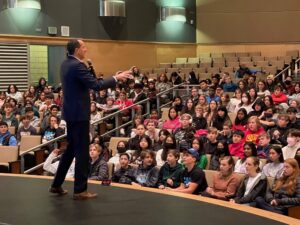
When we see schools and parents who provide genuine, strong support, the RESULTS are amazing. Last night, York University’s President spoke briefly before my presentation and then sat in the FRONT ROW with MANY of the Vice Presidents from the university (York is located in Toronto). The significance of the leadership staying for the show sent a strong message to the students of much York cares about this issue. Most Presidents of universities make a quick visit and then leave.
A school with a history of showing their support for this issue is where I am speaking this evening: Gustavus Adolphus College in St. Peter, Minnesota. Every year, we have a “Train the Trainer” session and then go to dinner with the leadership from the campus (heads of departments from various elements of the college – including the President) before presenting the “Can I Kiss You?” presentation. The week of the program, their professors and staff wear the “Can I Kiss You?” shirts for several days. The result is a line of students every year waiting outside the doors of the Ballroom 2 HOURS before the show starts. The campus’s support results in a ROCK CONCERT MENTALITY for addressing safer dating and sexual assault!
In both cases above, people made it a mission to get the top leadership heavily involved. They subtly and creatively engaged top leadership to the point that the leadership WANTED to be affiliated with the mission and the program. What are you doing to engage your leadership in a manner which makes them WANT to strongly support your mission?
SHARE in the “Leave a Comment” section below!
“In a perfect world, what would you need and want?”
When working on a project for the National Speakers Association earlier today, Randy Gage (Prosperity Expert), asked me this question:
“In a perfect world, what would you need and want?”
Then he was able to provide us what we needed and wanted. Thanks, Randy.
Now what about you? For working to help students, young adults, educators, and/or parents to address dating, sexual decision-making, consent, and/or supporting survivors, what would your answers be to, “In a perfect world, what would you need and want?”
I look forward to personally responding to everyone’s comments.
Sexual assault, alcohol & supporting survivors @ Wake Forest
WOW! Wake Forest University knows how to promote an educational event addressing sexual assault, intimacy, dating, and alcohol. Better yet, they know how to get RESULTS! Last night, over 1100 students (over 25% of their student body) attended the “Can I Kiss You?” program in Wait Chapel. The team on campus who was responsible for bringing me to speak was a DYNAMITE combination of talent, expertise, and passion. They worked diligently with several organizations and groups (Athletics, Greek Life, and the Student Center — all which showed up in big numbers).
As you scroll down through this blog posting, you will see video footage from the event. Join the Wake Forest students in making a commitment by signing the “Pledge for Action” here.
Did you attend the program at Wake Forest University?
If so, share your thoughts and feedback! Let us HEAR your voice by using our Audio Testimonial Program (click here). Another option is to share in our online forums.
Remember to INVITE all your family and friends to watch you in the below video!!
Parents need to take notice of signs for dating violence and abuse of teenagers
When it comes to teen violence, many families struggle to notice it, even with their own children. Some people write off inappropriate comments by thinking, "That just part of being a teenager" or "Kids will be kids." Other adults are intimidated by their own ignorance. You may not know the current language teenagers are using and so you feel out of touch. Instead of embarrassing yourself when intervening, you simply avoid the potential conflict. You do nothing.
Plus, we think as teenagers, they would speak out if someone their own age was making them feel uncomfortable or was hurting them. Reality is the direct opposite. Approval and being "part of the crowd" puts extreme pressure on teenagers NOT to speak out, even when they know something is not right. You don’t want to be the kid who ratted on someone.
What are the signs? Here are some starting points for teenagers (and even pre-teens) to look out for:
- Extreme jealousy
- Controlling behavior
- Quick involvement
- Unpredictable mood swings
- Alcohol and drug use
- Explosive anger
- Isolates you from friends and family
- Uses force during an argument
- Shows hypersensitivity
- Believes in rigid sex roles
- Blames others for his problems or feelings
- Cruel to animals and children
- Verbally abusive
- Abused former partners
- Threatens violence
The above 15 points are from Michelle Woods and her team at MayDay Inc. Michelle also states that as an educator and law enforcement, you should be on the lookout for these signs:
- Physical signs of injury
- Truancy, dropping out of school
- Failing grades
- Indecision
- Changes in mood or personality
- Use of drugs or alcohol
- Emotional outbursts
- Isolation
Bottom line, we need to teach our teens to choose better relationships and partners. Re-enforce the qualities of a loving and fair partner. As parents, we are responsible for teaching teens the warning signs.
Here is a recent article where these tips were provided by Michelle Woods and MayDay Inc:
Baker City Herald – MayDay Helps Teens Avoid Violence
Signs of Dating Violence or Abuse in Teen Relationships and/or Dating
Over the past few years, many of you do a really good job as educators and law enforcement identifying the signs of domestic abuse in children. You know what to do when you suspect it is happening; who to call; and actions to take. When it comes to teens abusing teens, the knowledge just isn’t there for many educators and law enforcement. The training has not been as readily available.
For some, it seems easier to come to the defense of a child when an adult is abusing them. You see the child as more of a victim, especially knowing the “power” component of children being taught to respect their elders, parents, relatives. Many adults use that power to control children.
When it comes to teen violence, it’s trickier. The perpetrators are their peers. People write off inappropriate comments by thinking, “That just part of being a teenager” or “Kids will be kids.” Some adults are intimidated by their own ignorance. You may not know the current language teenagers are using and so you feel out of touch. Instead of embarrassing yourself when intervening, you simply avoid the potential conflict. You do nothing.
Plus, we think as teenagers, they would speak out if someone their own age was making them feel uncomfortable or was hurting them. Reality is the direct opposite. Approval and being “part of the crowd” puts extreme pressure on teenagers NOT to speak out, even when they know something is not right. You don’t want to be the kid who ratted on someone.
What are the signs? Here are some starting points for teenagers (and even pre-teens) to look out for:
- Extreme jealousy
- Controlling behavior
- Quick involvement
- Unpredictable mood swings
- Alcohol and drug use
- Explosive anger
- Isolates you from friends and family
- Uses force during an argument
- Shows hypersensitivity
- Believes in rigid sex roles
- Blames others for his problems or feelings
- Cruel to animals and children
- Verbally abusive
- Abused former partners
- Threatens violence
The above 15 points are from Michelle Woods and her team at MayDay Inc. Michelle also states that as an educator and law enforcement, you should be on the lookout for these signs:
- Physical signs of injury
- Truancy, dropping out of school
- Failing grades
- Indecision
- Changes in mood or personality
- Use of drugs or alcohol
- Emotional outbursts
- Isolation
Bottom line, we need to teach our teens to choose better relationships and partners. Re-enforce the qualities of a loving and fair partner. As educators, law enforcements and most of all parents, we are responsible for teaching teens the warning signs.
Here is a recent article where these tips were provided by Michelle Woods and MayDay Inc:
Baker City Herald – MayDay Helps Teens Avoid Violence