

Technology verses Words

When teaching verbal skills, many Moms, Dads, and educators continually share how teens would rather text than talk.  To their credit, many teens are fantastic at multi-tasking and quickly absorbing technology uses to fit their lifestyle.  The unfortunate consequence is these skills are happening at the cost of losing one-on-one verbal tools.  What do you do?
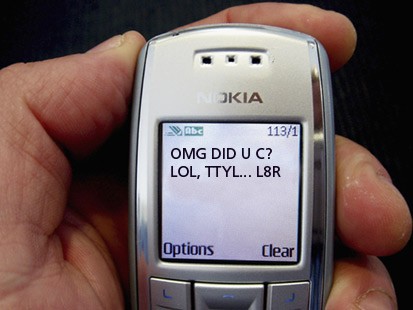
Use technology to show the need for verbal communication! Send texts to your teenager which could be interpreted various ways (commonly happens when texting is done frequently).  This way, you are utilizing a medium they love (texting) to bring them to verbally discuss the confusion with you.  I know! I know!  Stop before you say, “The teen may just attempt to text back and say, ‘Explain’(or a slang text phrase in place of the word).”  Then, walk up to your teen and ask them what was confusing.

You OWN the confusion so the conversation is not about them misusing technology.  As you clear up the confusion, subtly ask, “How do you handle it when this happens with friends?  Misunderstanding each other’s texts?  Do you ever just call to clear it up quicker than texting?

If they say, “No,” follow through with, “Why not? Isn’t talking to your friends a lot of fun?”  Be GENUINE in your approach. No one likes to be lectured to.  Ask because you WANT to know (not just to make YOUR POINT).  The more you understand your teen, the more likely you will be able to connect with him/her verbally!!  Thus being a positive role model for verbal communication.

YOUR TURN: Share how you use TECHNOLOGY to HELP enhance the verbal skills of teens.  Ask us questions based on your own experiences.  I will answer each COMMENT personally!

Signs of Dating Violence or Abuse in Teen Relationships and/or Dating

Over the past few  years, many of you do a really good job as educators and law enforcement identifying the signs of domestic abuse in children.  You know what to do when you suspect it is happening; who to call; and actions to take. When it comes to teens abusing teens, the knowledge just isn’t there for many educators and law enforcement.  The training has not been as readily available.

For some, it seems easier to come to the defense of a child when an adult is abusing them. You see the child as more of a victim, especially knowing the “power” component of children being taught to respect their elders, parents, relatives.  Many adults use that power to control children.

When it comes to teen violence, it’s trickier. The perpetrators are their peers.  People write off inappropriate comments by thinking, “That just part of being a teenager” or “Kids will be kids.”  Some adults are intimidated by their own ignorance. You may not know the current language teenagers are using and so you feel out of touch.  Instead of embarrassing yourself when intervening, you simply avoid the potential conflict.  You do nothing.

Plus, we think as teenagers, they would speak out if someone their own age was making them feel uncomfortable or was hurting them.  Reality is the direct opposite.  Approval and being “part of the crowd” puts extreme pressure on teenagers NOT to speak out, even when they know something is not right.  You don’t want to be the kid who ratted on someone.

What are the signs?  Here are some starting points for teenagers (and even pre-teens) to look out for:

  1. Extreme jealousy
  2. Controlling behavior
  3. Quick involvement
  4. Unpredictable mood swings
  5. Alcohol and drug use
  6. Explosive anger
  7. Isolates you from friends and family
  8. Uses force during an argument
  9. Shows hypersensitivity
  10. Believes in rigid sex roles
  11. Blames others for his problems or feelings
  12. Cruel to animals and children
  13. Verbally abusive
  14. Abused former partners
  15. Threatens violence

The above 15 points are from Michelle Woods and her team at MayDay Inc.  Michelle also states that as an educator and law enforcement, you should be on the lookout for these signs:

  1. Physical signs of injury
  2. Truancy, dropping out of school
  3. Failing grades
  4. Indecision
  5. Changes in mood or personality
  6. Use of drugs or alcohol
  7. Emotional outbursts
  8. Isolation

Bottom line, we need to teach our teens to choose better relationships and partners. Re-enforce the qualities of a loving and fair partner. As educators, law enforcements and most of all parents, we are responsible for teaching teens the warning signs.

Here is a recent article where these tips were provided by Michelle Woods and MayDay Inc:
Baker City Herald MayDay Helps Teens Avoid Violence

Our Networks
Linkedinfollow me